
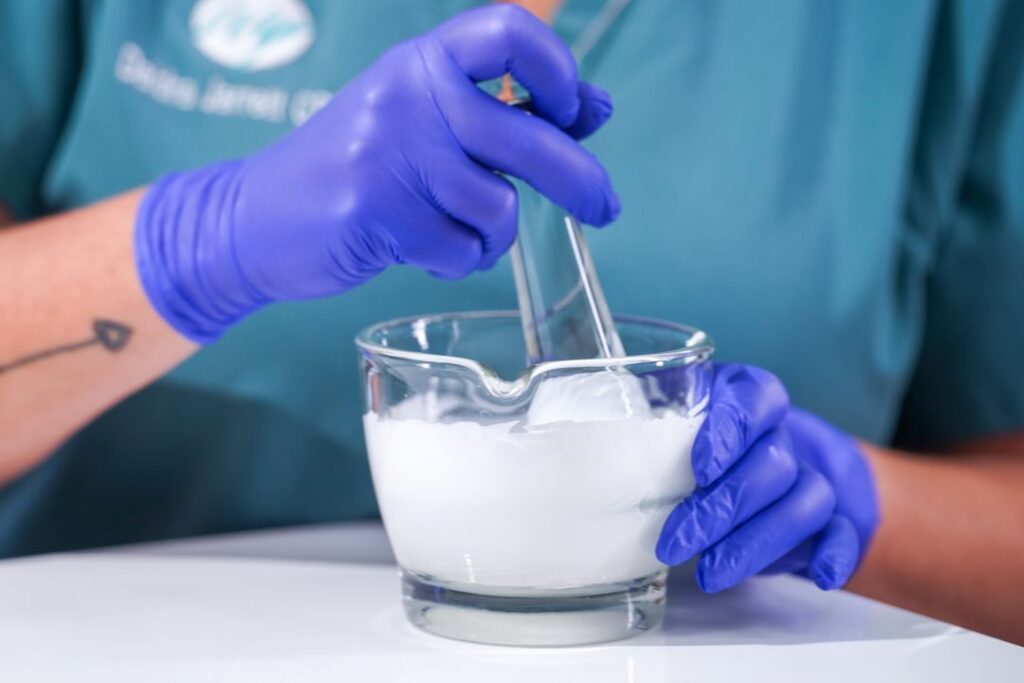
Compounded medications play an important role in personalized healthcare, yet many people are unfamiliar with what they are and when they’re used. At its core, pharmaceutical compounding is the process of creating a custom medication to meet the specific needs of an individual patient when commercially available drugs are not suitable.
What Are Compounded Medications?
Compounded medications are prepared by licensed pharmacists and technicians who combine, mix, or alter ingredients to create a medication tailored specifically to a patient’s prescription. Unlike mass-produced drugs made by pharmaceutical manufacturers, compounded medications are made in smaller quantities and customized for a particular patient. These compounded medications are prescribed by a healthcare provider and prepared in a compounding pharmacy.
Why Are Compounded Medications Needed?
There are many reasons a patient may need a compounded medication. Some patients are allergic to dyes, preservatives, or fillers commonly found in commercial medications. Others may require a dosage strength or a formulation (capsule, liquid, cream) that isn’t available on the market. Compounding addresses challenges such as difficulty swallowing pills, allowing medications to be made into liquids, topical creams, gels, or even flavored oral forms for children or pets.
Compounding is also useful when a medication is temporarily unavailable due to a shortage or when a discontinued drug is still clinically necessary. In these cases, compounding can help ensure continuity of care. A compounding pharmacy like Ivy, certified in all forms of compounding, can make literally any medication that a patient or pet might need!
Common Types of Compounded Medications
Compounded medications can take many forms, including capsules, creams, ointments, lozenges, suppositories, and injections. They are often used in areas such as dermatology, hormone therapy, pain management, weight loss, wellness, pediatrics, veterinary medicine, and hospice care. For example, a dermatologist may prescribe a compounded topical cream that combines multiple active ingredients into one application, simplifying treatment and improving adherence.
Safety and Regulation
Compounded medications are regulated differently from FDA-approved, commercially manufactured drugs. While the individual ingredients used in compounding may be FDA-approved, the final compounded product itself is not reviewed or approved by the FDA. Instead, compounding pharmacies are regulated primarily by state boards of pharmacy and must follow strict standards for quality, sterility, and safety. Ivy Pharmacy has state licenses in both Texas and New Mexico.
Reputable compounding pharmacies adhere to guidelines set by organizations such as the United States Pharmacopeia (USP) and invest in rigorous quality control processes. Patients should always use a licensed pharmacy and ask questions about sourcing, preparation standards, and storage. At Ivy, we invite ALL our patients to ask questions about our processes and take a tour of our facility.
Benefits and Considerations
The primary benefit of compounded medications is personalization. Personalization allows healthcare providers to fine-tune treatment in ways that commercially available medications cannot. However, because compounded medications are custom-made, they may not always be covered by insurance and can sometimes cost more than standard prescriptions. Because transparency is very important to our team at Ivy, our cash prices are available at any time. You can email or call our team for additional information.
Compounded medications are a valuable option when standard treatments don’t meet a patient’s needs. By offering customized dosages, alternative forms, and allergen-free options, compounding supports individualized care and better treatment outcomes. If you think a compounded medication may be right for you, talk with your healthcare provider and a trusted compounding pharmacy to explore your options. We would be honored to care for you. Call us anytime at (806)209-5140.